
Knowledge
Ethyl Acetate 99.8% vs 99.5%: What Changes
The real gap sits in water, ethanol and residue limits, and in the processes that never notice the difference.


Technical
2026-09-01
The 99.8% specification reads in min and max values rather than ranges, with a test method named on every line: ASTM D4052 for density, D1364 for water, D1613 for acidity, D1078 for distillation and D1353 for residue.
Purity on a wet basis includes the water the sample carries, which is why the same lot can differ by 0.1 to 0.2 points between a wet-basis and a dry-basis figure. Ask which basis a certificate uses before comparing suppliers.

Water results differ by method too. Karl Fischer titration and ISO 760 agree closely, but readings from different instruments rarely match to the last ppm, so a lot should be disputed against the same method it was released on.
The dry point of 78.5 °C is the line that matters to formulators. It caps the heavy tail of the distillation range, which is what keeps the evaporation curve repeatable from lot to lot.
Related Product
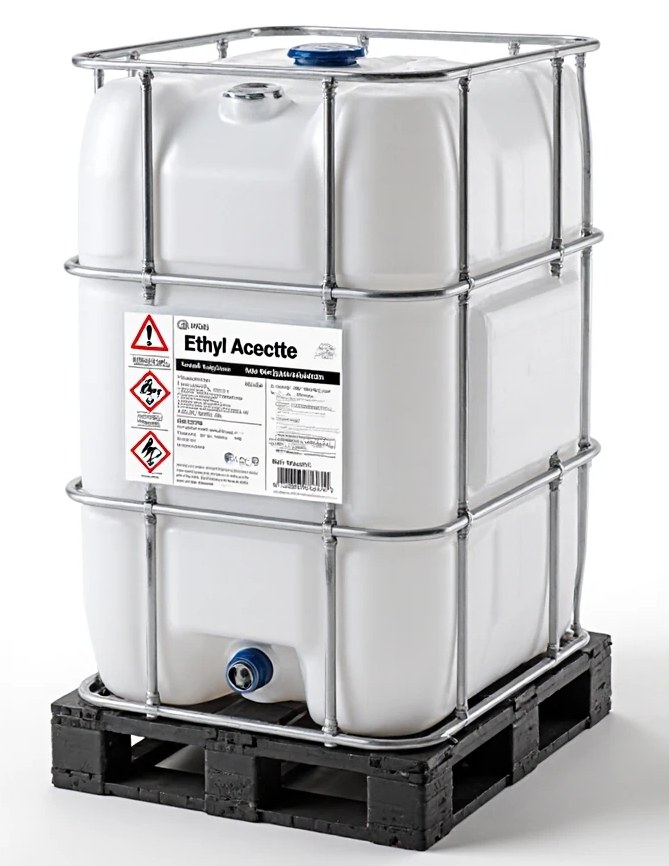
The grade with a published Sasol specification: 99.8% min, water 0.03% max.
More Reading
Knowledge
The real gap sits in water, ethanol and residue limits, and in the processes that never notice the difference.
Commercial
Drum, IBC and ISO tank economics, including fill weight, handling and container utilisation.
Contact
Send the grade, the volume and the destination port. A named contact replies within one working day.
Kristy Chen
 Scan to WhatsApp